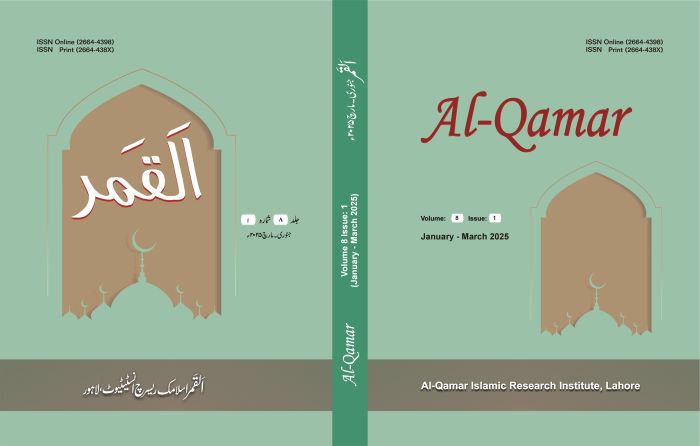
صحیحین میں وارد الفاظِ خیرو شرکے استعمالات اور ان کی عصری معنویت
The Uses of the Words "Khair" and "Shar" in the Sahīheen and their Contemporary Meaning
DOI:
https://doi.org/10.53762/alqamar.08.01.u06Keywords:
Khari (Good), Sharr (Evil), Sahih al-Bukhari, Sahih Muslim, Hadith Studies, Islamic EthicsAbstract
The present research explores the usage and implications of the terms "Khari" (good) and "sharr" (evil) as employed in the two most authentic Hadith collections of Islam Sahih al-Bukhari and Sahih Muslim. These terms hold significant weight in shaping Islamic moral, legal, and social frameworks. Through a detailed linguistic and contextual analysis of selected Hadiths, this study identifies the various dimensions in which the concepts of good and evil have been applied whether in personal ethics, communal relations, or socio-political behavior. Furthermore, the research aims to highlight the contemporary relevance of these Prophetic traditions in addressing modern ethical challenges. The study shows that the Hadith literature does not merely mention good and evil in a theological sense, but also offers a practical roadmap for individuals and societies. The findings of the research demonstrate that the use of these terms is deeply rooted in actionable guidance and moral clarity which remains vital in the contemporary world dominated by relativism and moral ambiguity.
This study contributes to the broader field of Hadith studies, Islamic ethics, and contemporary thought by linking classical Islamic concepts with modern day applications. It also emphasizes the need for a renewed understanding of the Prophetic approach to good and evil in light of current social realities.
Downloads
Downloads
Published
Issue
Section
License
Copyright (c) 2025 Muhammad Bilal, Muhammad Yaseen (Author)

This work is licensed under a Creative Commons Attribution-NonCommercial-NoDerivatives 4.0 International License.